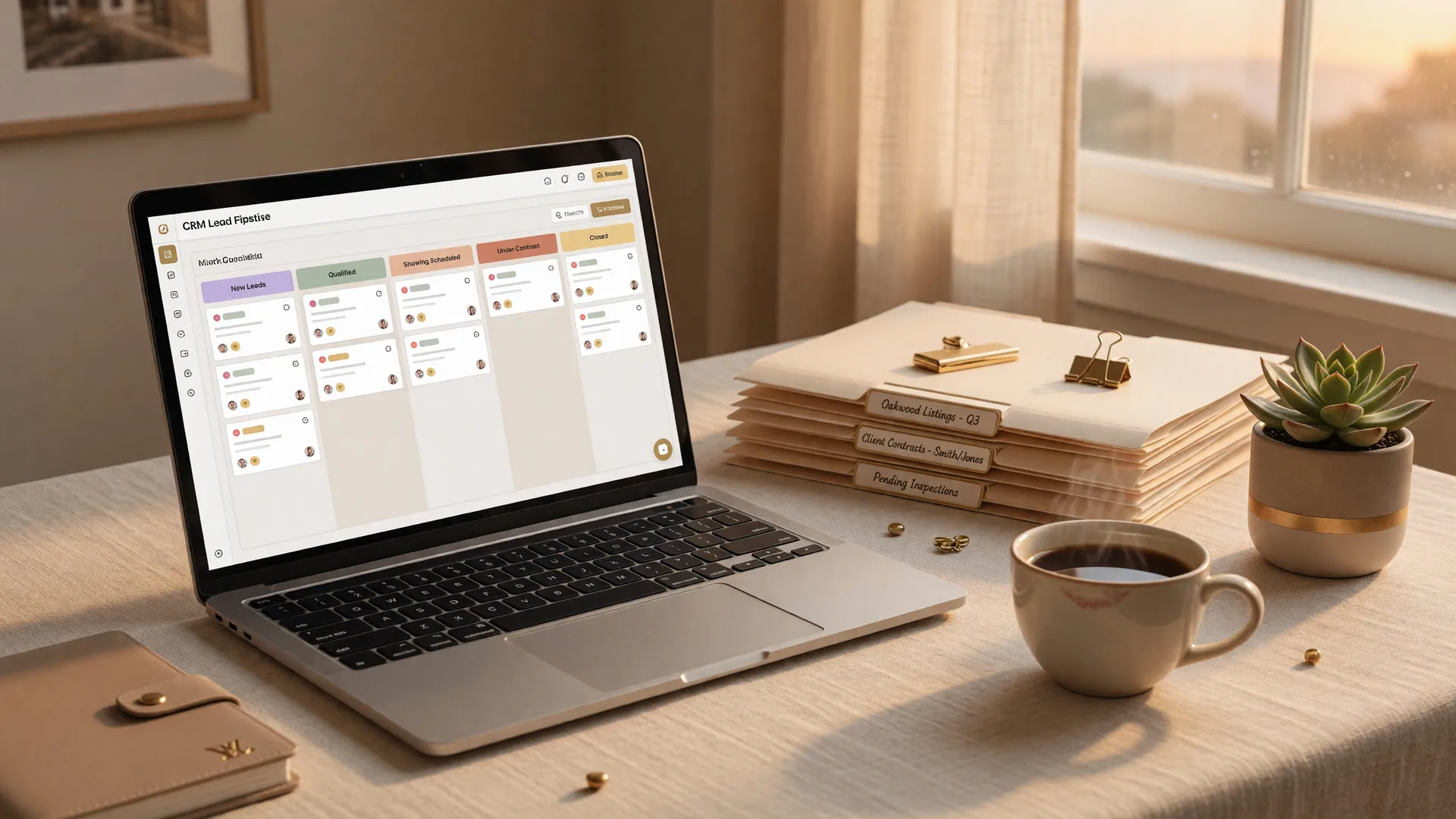
In this post I'll show you why your database needs a cleanup, the exact steps to deduplicate and segment it, the compliance rules you cannot skip in 2026, and a monthly audit routine that keeps it clean for good. This is the same system I walk agents through when they realize their CRM is a graveyard instead of a goldmine.
Why Does Your CRM Get Messy in the First Place?
It is not because you are lazy, it is because real estate is a lead firehose. Your IDX site, Zillow and Realtor.com ported leads, Facebook ads, open houses, referral intros, and vendor contacts all land in one place with different formatting, different names, and different duplicates. One buyer's saved search comes in three times because they used three email addresses. A seller who referred you in 2019 sits beside a lead who never responded once. Before long the list is so noisy you stop trusting it, and that is when the real damage starts: you stop calling.
The fix is not a one-time spring cleaning. Data decays every year, people move, emails bounce, phone numbers change. Treat database hygiene like the recurring routine it is, a monthly habit that takes two hours, not a project you do once and forget. That mindset shift is the whole game.
How Do You Deduplicate Your CRM Without Losing Data?
Here is a number that surprises most agents: exact-match deduplication catches only about twenty percent of real duplicates. Two records for the same person almost never match perfectly, one has a middle initial, one drops the area code, one misspells the street. If you only merge obvious exact matches you leave most of the duplicates behind.
Use fuzzy matching instead. The highest-confidence key is the phone number, so strip all formatting and match on the core ten digits. Then fuzzy-match name plus address. When you find a match, merge everything into one master record: notes, activities, and source attribution all transfer over, and you archive the duplicate rather than delete it so nothing is lost. Most CRMs bake this cleanup in, but the habit is what counts, run a dedup check every week and always dedupe before you import a new list of leads.
How Should You Segment Your Database in 2026?
Hot, warm, and cold is a starting point, but it is too blunt. Real segmentation goes by behavior and intent, not just how recently someone went quiet. Here are the buckets I coach agents to build:
- Active buyers: pre-approved or actively touring. They get speed and listings first.
- Active sellers: preparing a home or interviewing agents. They get market data and a CMA conversation.
- Past clients by closing year: your referral engine. Equity updates and houseiversary emails keep you top of mind.
- Cold leads: ninety or more days inactive. They go on a gentle re-engagement series, not your daily call list.
- Sphere of influence: friends, family, and referral contacts who will send you business even without a transaction.
Layer behavioral signals on top: who opens your emails, who views listings, who searches your site. Agents who segment properly see conversion lift of about ten percent, because every message finally goes to the person it was written for. If you have not built your segments yet, start with my CRM best practices guide for the foundation, then add this layer.
What Compliance Rules Can You Not Skip in 2026?
A clean database is also a compliant one, and this is where agents get themselves in trouble. For calls and texts, scrub your list against the National Do Not Call registry and honor prior express written consent for automated texts and calls under TCPA. The old one-to-one consent rule was vacated, but state mini-TCPA laws have picked up the slack, so your exposure is real. Never buy leads without verifying the seller's consent transfers to you. For email, CAN-SPAM requires accurate sender information, a truthful subject line, your physical address, and a visible unsubscribe that you honor promptly.
State privacy laws like CCPA also give people the right to know what you hold and to ask you to delete it, so keep a simple process to honor those requests. Track consent and opt-outs right in the CRM, and honor any reasonable revocation, if someone replies STOP, they are out. None of this is glamorous, but it is what keeps a database you can actually use for years.
How Do You Re-Engage Stale Leads Without Annoying Them?
Cold does not mean dead. Some of the biggest paychecks I have ever seen started with a lead who went quiet for a year and then called about a move-up or an inheritance. The trick is to re-engage in targeted segments, never blast your whole list at once.
- Verify your hot leads. Anything marked active should have been contacted in the last fourteen days. If it has not, either it is not actually hot or you have a follow-up gap to fix.
- Move the quiet ones. No contact in sixty days drops to a nurture segment, not your daily call list. No contact in ninety days gets flagged as cold.
- Run targeted campaigns. Send a seasonal or topical series filtered by geography and price range, a market update for their neighborhood, a new-listing alert they asked for years ago. Make it useful, not salesy.
- Refresh contact info. Skip-tracing can find a new phone or email for people worth keeping, but spend it only on the segments that justify it.
- Automate the wake-up. Set your CRM to tag and alert you the moment a passive lead shows new activity, a saved search, a listing view, an email open. That is your signal to call them that day.
- Let go of the unreachable. Reassign or drop records that stay uncontactable after a re-engagement cycle. A clean list you actually work beats a huge list you never touch.
What Does the Monthly Audit Routine Look Like?
Block two hours once a month, same week every month. Run your dedup check and merge what it finds. Review your hot segment and confirm everyone there was contacted recently. Move the stale, flag the cold, and refresh the ones worth refreshing. Then run one targeted re-engagement campaign and log the responses. That is the whole routine. It keeps your asset compounding instead of decaying.
I have been in this business for more than thirty years, and the agents who treat their database like a system to maintain, not a pile to ignore, are the ones who never run out of business. If you want help building the cleanup routine, choosing the right CRM, or wiring up the follow-up systems that turn a clean list into closings, that is exactly the work I do. Book a free strategy call and we will look at your database together, or browse my coaching services to see how I help agents turn their CRM into a repeat-business machine.

Written by Kim Donahue
Kim Donahue is a REALTOR® with Medway Realty and a coach with 30+ years of experience across real estate, mortgage, and business ownership. She specializes in helping agents leverage AI, marketing, and modern systems to build stronger businesses.
Learn more about Kim