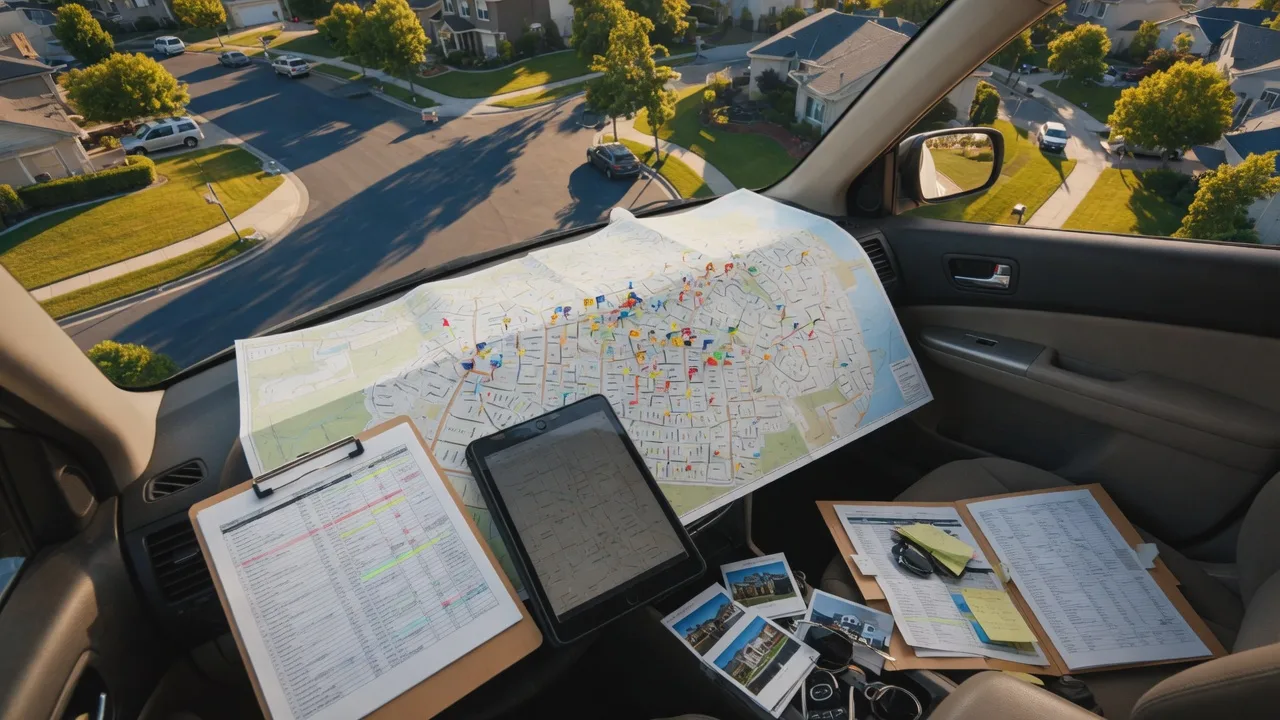
I am going to tell you something that took me years to learn. The agents with the most predictable, sustainable businesses are not the ones with the fanciest websites or the biggest social media followings. They are the ones who picked a neighborhood, planted a flag, and never stopped showing up.
Geographic farming is not glamorous. You will not see a viral TikTok about it. But it is the backbone of every listing-heavy business I have ever seen succeed over the long haul. When I ran my own brokerage, the agents who farmed their areas consistently were the ones who never had to worry about where their next listing was coming from. They had name recognition, trust, and a pipeline that kept flowing year after year.
And here is the best part: in 2026, with all the digital tools and data available, geographic farming is more effective than ever. The fundamentals have not changed, but the execution has gotten smarter. Let me walk you through exactly how to make it work in today's market.
What Is Geographic Farming and Why Does It Still Work in 2026?
Geographic farming is the practice of choosing a specific neighborhood or area of 250 to 500 homes and marketing to that area consistently over time. The goal is to become the agent that everyone in that neighborhood knows, trusts, and calls when they are ready to sell.
Unlike social media marketing, where your content competes with millions of other posts, geographic farming is a local strategy. When done right, you own a territory. New agents who move into your farm area will hear your name from their neighbors. Sellers will have seen your face in their mailbox, on their community Facebook page, and at their neighborhood events for months before they pick up the phone.
The data backs this up. In 2026, agents using structured geographic farming strategies report significantly higher listing conversion rates than agents who chase leads through broad digital advertising. Why? Because farming builds what paid ads cannot buy: trust through familiarity.
How Do You Choose the Right Farm Area?
The single biggest mistake I see agents make is picking a farm area for the wrong reasons. They choose the neighborhood they live in because it is convenient. Or they pick the wealthiest area in town because they want bigger commissions. Or they pick a neighborhood that already has five established agents farming it.
Here is how you choose a farm area that will actually produce results:
The Farm Selection Checklist
- Turnover rate of 5-8% or higher: This is the most important number. A neighborhood where homes turn over every 12 to 20 years is worth farming. If turnover is below 4%, you will work twice as hard for half the results. Check your local MLS for historical sales data in the area.
- 250 to 500 homes max: You cannot own a territory if it is too big to blanket consistently. A farm of 300 to 400 homes is ideal. That is enough volume to generate steady business but small enough that you can learn every street, every HOA board member, and every local issue.
- Price point alignment: Pick a farm where the average home price supports your income goals. If you need six transactions a year from your farm to replace your current lead sources, make sure the math works. A $200,000 farm requires more volume than a $500,000 farm to produce the same GCI.
- Low competition: Check how many other agents actively farm the area. Look at who is sending mailers, sponsoring neighborhood events, or running Nextdoor campaigns. Some competition is healthy. Being the seventh agent in a 300-home neighborhood is not.
- Your personal connection: Do you know this area? Can you talk authentically about the schools, the parks, the commute times, and what makes it special? Buyers and sellers can tell when you are faking local knowledge.
I recommend you identify three candidate neighborhoods using MLS data, drive through each one at different times of day, talk to a few residents, and then pick one to start. You can always expand to a second farm once you have the first one producing consistently.
What Does a Monthly Farm Marketing System Look Like?
Consistency is everything in geographic farming. Sending one mailer and stopping will waste your time and money. You need a predictable, repeatable monthly system that runs on autopilot. Here is the monthly farm marketing cadence that works:
The Monthly Farm Cadence
- Month 1, Week 1 Send a "just listed" or "just sold" postcard featuring a home in or near the farm area. This proves you are actively selling homes in the neighborhood.
- Month 1, Week 3 Send a market update postcard with local stats: how many homes sold last month, average days on market, median price trends. Be the source of neighborhood market intelligence.
- Month 2, Week 1 Send a value-add piece: a seasonal home maintenance checklist, holiday decoration guide, or local event calendar. Something useful that does not ask for anything.
- Month 2, Week 3 Send a "just listed" or "just sold" update. Rotate back to proving your activity in the area.
That is two pieces per month, every month, without fail. The agents who see results from farming are the ones who stick with it for 12 to 18 months minimum. Most people quit at month four because they have not seen a return yet. That is exactly when the strategy starts to work.
How Do You Combine Digital Marketing with Physical Farming?
In 2026, the most effective geographic farmers use a hybrid approach. Physical mailers build name recognition, but digital tools accelerate trust and capture leads. Here is how to layer digital on top of your physical farm:
Digital Overlay Strategies
- Create neighborhood-specific content: Write blog posts about the neighborhood -- local schools, parks, restaurant recommendations, commute patterns. Optimize them for search terms like "living in [neighborhood name]" and "homes for sale in [neighborhood name]."
- Join neighborhood social media groups: Be active on Nextdoor, neighborhood Facebook groups, and local community pages. Share useful information. Answer questions. Never pitch. Build the reputation as the helpful local expert.
- Run hyperlocal Google Ads: Once you have a neighborhood-specific landing page on your site, run a small Google Ads campaign targeting your farm area by ZIP code. Even a $200 monthly budget can put you in front of sellers searching for "sell my home in [neighborhood]."
- Use your CRM for farm follow-up: Every time someone from your farm area visits your website, calls you, or stops by an open house, tag them in your CRM as a farm contact. Add them to a farm-specific nurture sequence with neighborhood market updates and personalized touchpoints.
How Long Does Geographic Farming Take to Produce Results?
I want to be direct with you because this is where most agents get it wrong. Geographic farming is not a 30-day lead generation hack. It is a long-term business development strategy.
Here is a realistic timeline based on what I have seen across hundreds of agents:
- Months 1-3: You are invisible. No one remembers your name yet. This is the investment phase. Do not expect calls. Focus on consistent execution.
- Months 4-6: The first few residents start to recognize your name and face. You might get a call from someone who saw your mailer. This is the tipping point where persistence starts to pay.
- Months 7-12: You are now a familiar face. Your phone starts ringing more regularly. You close your first farm-sourced listing. The system begins to produce.
- Months 13-24: You own the neighborhood. Residents think of you first when real estate comes up. Your farm becomes a self-sustaining source of listings and referrals. This is the payoff.
The agents who succeed at farming are the ones who understand this timeline and do not deviate. They do not panic at month four and switch strategies. They trust the process and keep showing up.
What Is the ROI of a Well-Farmed Area?
Let me put some real numbers on this. If you farm a 300-home neighborhood where the average home value is $400,000 and turnover is 6% per year, that is 18 homes selling per year in your farm area. If you capture just 25% of that market share, that is 4 to 5 listings per year. At a 2.5% commission, that is $40,000 to $50,000 in GCI -- from one neighborhood.
Your costs? Quality direct mail for 300 homes twice a month runs about $500 to $700 per month. That is roughly $6,000 to $8,400 per year. Digital overlay adds another $200 to $300 per month for ads and tools. Total investment: around $10,000 per year.
A $40,000 return on a $10,000 investment is a 4x ROI. And that is a conservative estimate. Top-performing farmers capture 30% to 40% of their farm's transaction volume within two to three years. The ROI only grows over time because your brand equity compounds. Year four is almost always better than year one.
7 Actionable Steps to Start Your Farm This Week
Let me give you a concrete plan you can execute starting right now:
- Pull MLS data for three candidate neighborhoods. Look at sales volume, turnover rate, average price, and DOM over the last 12 months. Pick the one with the best balance of turnover and price point.
- Drive the neighborhood. Walk a few blocks. Talk to residents if you can. Note the condition of homes. Get a feel for the community vibe. Does it feel like a place where people know their neighbors?
- Create a neighborhood landing page on your website. Write 500 words about what makes the area special. Include school information, local amenities, and recent market data. This is your digital hub for the farm.
- Set up your direct mail sequence. Choose a provider (I recommend checking out Handwrytten for personalized mail or a local print shop for volume). Commit to two mailings per month for 12 months.
- Join local online communities. Find the neighborhood's Nextdoor, Facebook groups, and any community forums. Start participating without selling.
- Build a farm contact list in your CRM. Export the homeowner data from your farm area and import it. Tag every contact with a "Farm [Neighborhood Name]" label.
- Set a monthly review. Block 30 minutes on your calendar every month to review what is working. Track calls, website visits, and listing leads that come from your farm activity.
The Agents Who Farm Win Long Term
I have been in this business long enough to see every trend come and go. But geographic farming is not a trend. It has been the foundation of successful listing agents for decades, and it is not going away. The tools have gotten better. The data is more accessible. But the principle is the same: show up consistently in one place, add value, build trust, and the business will follow.
The agents who commit to a farm area and execute for 18 months are the ones who build the kind of business that survives market shifts, algorithm changes, and economic uncertainty. If you are tired of chasing leads one at a time and want to build a business that produces predictably, pick a neighborhood and start farming.
If you want help choosing your farm area, setting up your marketing system, or creating your neighborhood landing page, let us talk. I help agents build exactly this kind of business through coaching and strategy.
Ready to Build Your Farm Strategy?
Book a free strategy call with Kim Donahue and get a personalized geographic farming plan for your market.
Schedule Your ConsultationFrequently Asked Questions
How many homes should be in my farm area?
The sweet spot is 250 to 500 homes. Fewer than 250 and you will not have enough transaction volume to make the effort worthwhile. More than 500 and you dilute your marketing budget and lose the ability to build real local knowledge and connections.
How much does geographic farming cost per month?
For a 300-home farm, expect to spend $500 to $700 per month on direct mail, plus another $200 to $300 for digital ads and tools. Total monthly cost is roughly $700 to $1,000. At a 4x ROI or better within 12 to 18 months, this is one of the most cost-effective marketing strategies available to agents.
Should I farm the neighborhood I live in?
It is a common starting point, but not always the best choice. Your own neighborhood can work if it meets the selection criteria -- good turnover rate, manageable size, and a price point that supports your income goals. But do not default to it without checking the data. Plenty of agents fail at farming because they chose their own neighborhood for convenience rather than potential.
How long before I see results from geographic farming?
Expect to invest 6 to 12 months before you see a significant return. Most agents who quit farming do so at month 4 or 5, right before it starts working. The agents who commit to 18 months of consistent execution are almost always thrilled with the results.

Written by Kim Donahue
Kim Donahue is a REALTOR® with Medway Realty and a coach with 30+ years of experience across real estate, mortgage, and business ownership. She specializes in helping agents leverage AI, marketing, and modern strategies to build stronger businesses.
Learn more about Kim