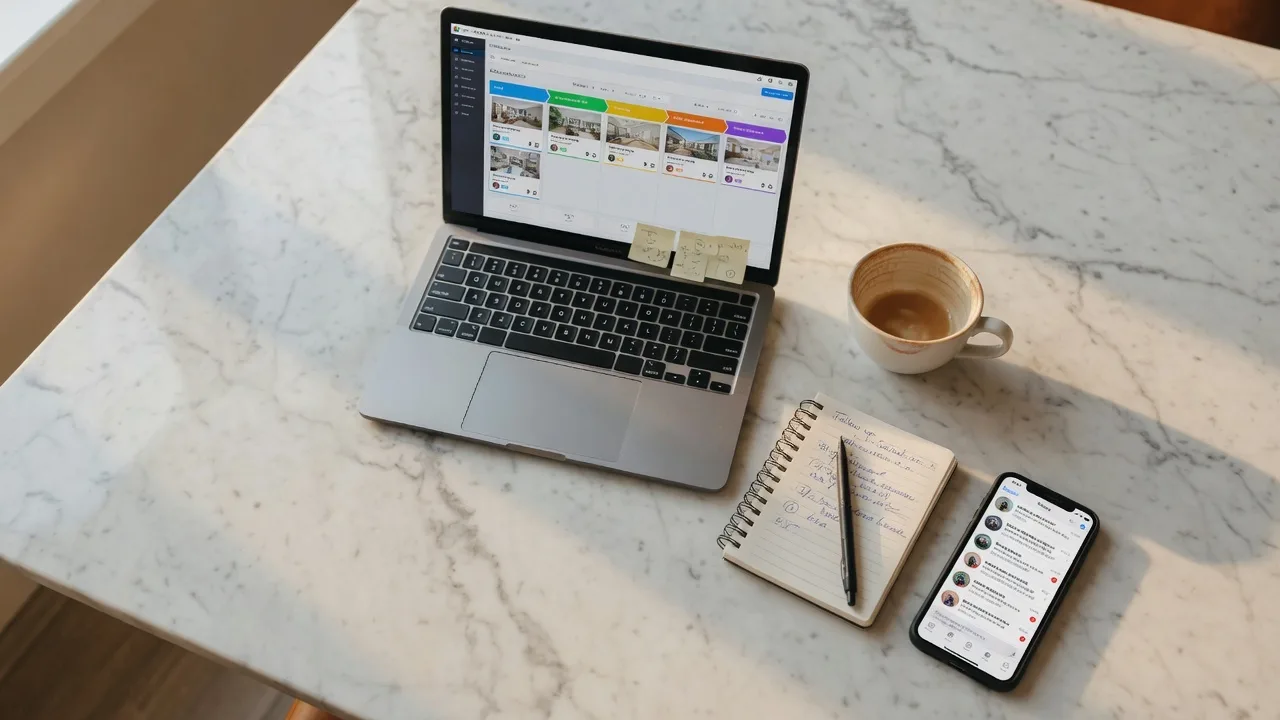
Here's a number that surprises most agents: the national average conversion rate for internet leads is between 0.4% and 1.2%. But top-performing agents — the ones who treat lead conversion like a system, not a coin flip — convert 3% to 5% of the same leads. That's not luck. That's a process. And if you're not following a structured conversion system, you're leaving thousands of dollars in commissions on the table every single month.
Why Do Most Real Estate Agents Fail to Convert Cold Leads?
After three decades in real estate — including running my own brokerage and coaching hundreds of agents — I've identified the same pattern over and over. Agents generate leads, make one or two attempts to contact them, and then give up. They assume that if someone doesn't respond quickly, they're not serious.
That assumption is wrong. Research shows that most leads take between 6 and 18 months to transact, and it takes an average of 8 to 12 touchpoints before a lead converts into a client. The agents who close consistently aren't more charismatic — they're more persistent, and they follow a system that keeps them in front of the right lead at the right time with the right message.
Kim Donahue, a REALTOR® with Medway Realty serving Sarasota, Manatee, and Charlotte Counties, teaches a lead conversion framework that she calls "the long game with a short fuse." The short fuse is speed to lead — responding within minutes. The long game is the structured follow-up system that nurtures leads who aren't ready today but will be ready in three months, six months, or a year.
"I've had clients who I followed up with for eight months before they were ready to buy," Kim says. "If I'd given up after two calls like most agents do, I would have lost a $400,000 transaction. Persistence backed by a system is what separates consistent closers from agents who feast and famine."
What Is Speed to Lead and Why Does It Matter More Than Anything Else?
Speed to lead is exactly what it sounds like: how quickly you respond to a new inquiry. And the data is unambiguous — agents who respond within five minutes are up to nine times more likely to convert that lead than agents who respond after 30 minutes. After one hour, the conversion probability drops by 80%.
Here's what a best-in-class speed-to-lead system looks like in practice:
The Speed-to-Lead Sequence
- Within 30 seconds — Automated text message: "Hi [name], this is Kim Donahue with Medway Realty. I saw you were looking at [listing/neighborhood] — do you have any questions I can answer right now?" This message should be automated so it fires the instant a lead enters your system. It acknowledges their interest immediately and opens a two-way conversation.
- Within 1 minute — Branded email: A short, personalized email with your headshot, contact details, and a direct link to schedule a consultation or call. This isn't a generic drip — it's a targeted acknowledgment that references their specific interest.
- Within 5 minutes — Personal phone call: The auto-text and email buy you time, but a real phone call within five minutes is where leads actually convert. If you're in an appointment, have a team member or virtual assistant make the call. The goal is to have a real conversation before the lead fills out a form with your competitor.
- Day 2 — Value-add follow-up (if no response): A second text and email that adds specific value — a market stat for their target area, a link to a relevant blog post, or a listing that matches their criteria. This isn't "just checking in" — it's demonstrating expertise.
- Day 3–7 — Phone call rotation: Call every other day for the first week, varying the time of day. People's schedules change — morning call didn't connect? Try mid-afternoon. Evening didn't work? Try early morning. Don't leave more than one voicemail without a text pairing.
Most agents stop after one or two attempts. Top converters follow up 8 to 12 times in the first two weeks, then transition to a long-term nurture sequence. The lead who doesn't answer your first three calls isn't uninterested — they're busy. Keep showing up, and you'll be the agent they call when they're finally ready.
How Do You Build a Lead Nurture System That Runs on Autopilot?
A lead nurture system is the automated and semi-automated follow-up engine that keeps you in front of leads who aren't ready to transact yet. The goal is simple: when they're ready, you're the first agent they think of. Here's the framework that works:
Stage 1: Hot Leads (Ready Now — 0 to 3 Months)
These leads have a defined timeline, have been pre-approved, and are actively looking. They need personal, high-touch follow-up — not automated emails. Call or text them every day or every other day. Schedule a consultation within the first 48 hours. Show them properties. This is where your conversion effort is most intense.
Stage 2: Warm Leads (Planning Ahead — 3 to 12 Months)
These leads know they want to buy or sell but aren't ready to act immediately. They might be waiting for a home to sell, a lease to expire, a job transfer to finalize, or savings to accumulate. This is where most leads sit — and where most agents give up too early.
For warm leads, build an automated drip sequence that delivers value without being pushy:
- Weekly market update email — specific data for their target neighborhood: median price, new listings, days on market. Show them you're monitoring their area.
- Monthly personal check-in text — not "just checking in" but something specific: "Hey Sarah, I noticed a new listing in Lakewood Ranch that matches what you described — want me to send you the details?"
- Quarterly phone call — a real conversation about their timeline, any changes, and how you can help when they're ready. This is the touchpoint that most agents skip — and it's the one that wins the relationship.
- Occasional value-add content — a blog post, a neighborhood video, a local event guide. The content should be relevant to their interests, not generic. This is where AI tools like Claude can help you personalize messages at scale without losing authenticity.
Stage 3: Cold Leads (Long-Term Nurture — 12+ Months)
These leads have gone quiet or have a timeline beyond a year. They need low-frequency, high-value touchpoints that keep your name in their orbit. A monthly email newsletter with market insights, a quarterly text, and an annual personal note (like a handwritten card or a home anniversary message) are enough to maintain the relationship without overwhelming them.
The key insight: cold leads are not dead leads. Industry data shows that 30% of leads who don't transact in the first year eventually do — but only if the agent stayed in touch. That's a third of your leads reactivating over time, and most agents lose them because they stopped following up.
What Multi-Channel Follow-Up Actually Looks Like?
Single-channel follow-up — calling only, texting only, or emailing only — converts at roughly half the rate of multi-channel follow-up. Here's why: different people respond to different channels at different times. A busy professional might ignore phone calls but respond instantly to a text. Someone who never checks email might engage with a voicemail. The most effective approach uses all three channels in a coordinated sequence:
The Multi-Channel Follow-Up Sequence
- Day 1 Auto-text (30 sec) → Auto-email (1 min) → Phone call (5 min) → Personal text if no answer
- Day 2 Value-add email with market data + phone call
- Day 4 Phone call at a different time + text: "Wanted to make sure my last message didn't get buried"
- Day 7 Phone call + voicemail with a specific reason to call back (new listing, market update)
- Day 14 Email with local content (blog post, neighborhood guide, video) + text asking if timeline has changed
- Day 30+ Transition to automated nurture sequence based on lead stage (hot, warm, or cold)
How Can AI Accelerate Your Lead Conversion Without Losing the Human Touch?
AI has fundamentally changed what's possible in lead conversion. In 2026, the most productive agents use AI to handle the repetitive, time-consuming parts of follow-up while they focus their energy on the high-value conversations that close deals. Here's how:
- AI-powered instant response: Set up your CRM to send personalized auto-texts and emails the moment a lead enters your system. Modern CRMs like Follow Up Boss, Lofty, and kvCORE can trigger these sequences automatically, referencing the specific listing or neighborhood the lead inquired about.
- Automated lead scoring: AI-enhanced CRMs can score leads based on behavioral signals — website visits, listing saves, email opens, and form submissions. This tells you exactly which leads to prioritize for personal outreach and which ones to move into automated nurture.
- AI-drafted follow-up messages: Use tools like Claude to generate personalized follow-up emails and text drafts based on each lead's profile, property interests, and stage in the pipeline. Always review and add your personal voice before sending — the goal is speed and relevance, not robotic automation.
- Predictive re-engagement alerts: Some AI-powered CRMs can detect when a cold lead re-engages — visiting your website, opening an email, or saving a listing — and immediately notify you so you can follow up while their interest is fresh. This feature alone can recover leads that would otherwise be lost.
For a deeper dive into AI-powered CRM setup, see CRM Best Practices Every Real Estate Agent Needs in 2026.
What Scripts and Talking Points Actually Work?
The words you use matter — but not the way most script books teach them. The goal isn't to follow a rigid script word-for-word. It's to have a framework that keeps you focused, confident, and value-driven during every conversation. Here are the principles and approaches that convert:
The First Phone Call
Open with genuine curiosity, not a pitch. "Hi, this is Kim Donahue with Medway Realty — I saw you were looking at homes in Lakewood Ranch. I'd love to hear what you're looking for and see if I can help." Then listen. Ask about their timeline, their must-haves, their concerns. The more they talk, the more you learn — and the more trust you build. End the call by offering something specific: "Can I send you a few listings that match what you described?" or "Would it help if I pulled together a market snapshot for that area?"
The Follow-Up Call (Days 3–7)
Don't open with "just checking in." Open with value: "I came across a new listing this morning that hit every criteria you mentioned — I wanted to make sure you saw it before it goes active." Or: "I was at an open house in your target neighborhood this weekend, and I noticed some interesting things about the market there that I think you'd want to know." Lead with something useful, not a reminder that you exist.
Handling Common Objections
- "We're not ready yet." "Totally understand — there's no rush. Can I keep you updated on new listings and market changes in the area? That way, when you are ready, you'll have a clear picture of what's happening."
- "We're working with another agent." "Great — having representation is important. If you ever want a second opinion or have questions I can help with, my door is always open. No pressure at all."
- "I'm just browsing." "Nothing wrong with that — browsing is how it starts. When you're ready to get more serious, I'd love to be a resource. Can I send you some market updates so you can watch how the area develops?"
The common thread: validate their position, offer value, and leave the door open. Aggressive follow-up pushes people away. Consistent, value-driven follow-up pulls them in.
How Do You Measure and Improve Your Conversion Rate?
You can't improve what you don't measure. Here are the metrics you should track weekly:
- Speed to lead average: How many minutes elapse between lead capture and first contact? Target: under 5 minutes for internet leads.
- Contact rate: What percentage of your leads do you actually reach? If it's below 40%, you need to adjust your call timing or increase your attempt frequency.
- Appointment set rate: What percentage of contacted leads schedule a consultation? Industry benchmark is 15% to 20%.
- Appointment to close rate: What percentage of consultations convert to signed clients? Top agents hit 40% to 60%.
- Pipeline aging: How many leads in your CRM have gone more than 90 days without a touchpoint? If the number is high, your nurture system has gaps.
Review these numbers every Monday morning. If your speed to lead is slow, set up automation. If your contact rate is low, vary your call times. If your appointment set rate is weak, improve your opening and value proposition. Small adjustments in each metric compound into dramatically different results over a quarter.
The Bottom Line
Lead conversion isn't about charm or salesmanship — it's about system, speed, and consistency. The agents who convert the most leads aren't doing anything magical. They respond fast, follow up persistently, use multi-channel outreach, personalize their messages, and never stop nurturing until the lead says yes or says never.
If you're generating leads but not converting them, you don't have a lead problem — you have a follow-up problem. And follow-up problems are fixable. Build the system, trust the process, and let the numbers work for you.
Want help building a lead conversion system that actually works? Book a free strategy call with Kim Donahue and get a personalized follow-up playbook designed for your pipeline and your business.

Written by Kim Donahue
Kim Donahue is a REALTOR® with Medway Realty and a coach with 30+ years of experience across real estate, mortgage, and business ownership. She specializes in helping agents leverage AI, marketing, and modern strategies to build stronger businesses.
Learn more about Kim