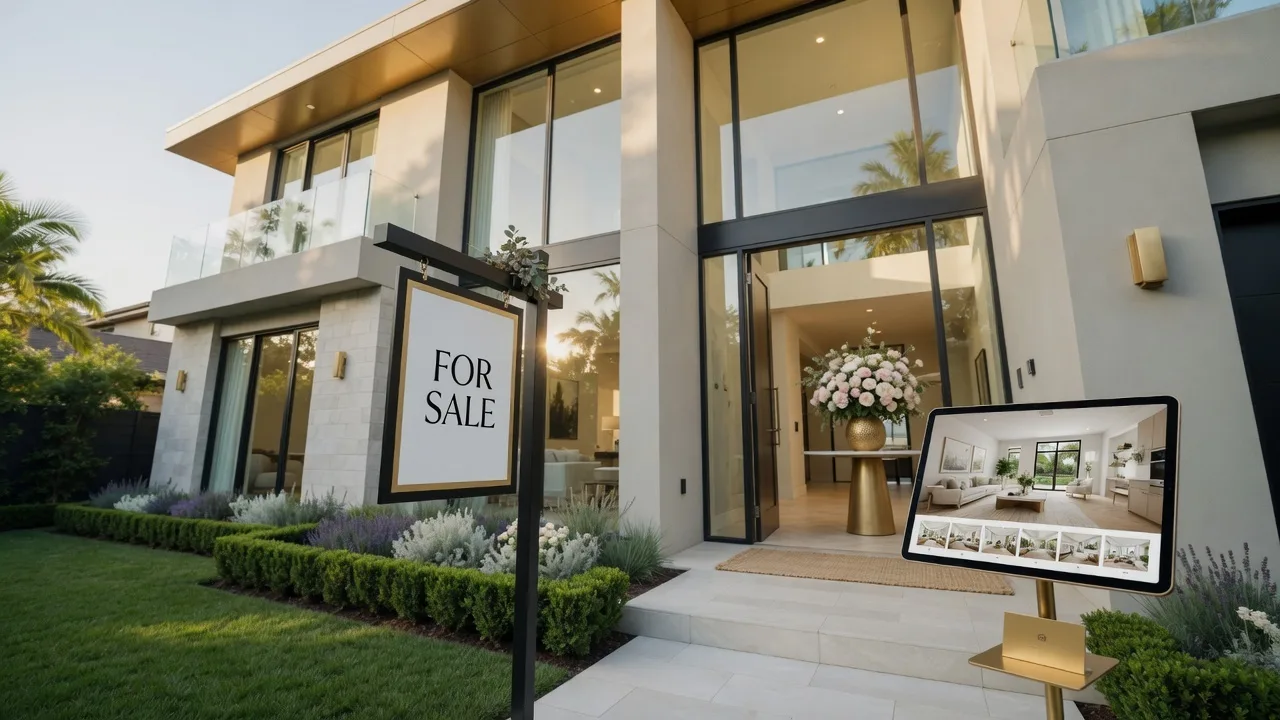
Let me be honest with you — the way most agents market listings hasn't kept up with the way people actually buy homes. I still see agents relying on the same playbook from 2015: put a sign in the yard, run a newspaper ad, hold a couple of open houses, and hope for the best. That approach is leaving money on the table — and leaving listings sitting on the market.
In 2026, over 97% of home buyers start their search online. That means your listing marketing needs to meet them where they already are: on Instagram, YouTube, Google Search, and the MLS. But here's the good news — you don't need a massive budget or a marketing agency to do this well. What you need is a system. After 30 years in real estate, mortgage, and business ownership, I can tell you the most effective listing marketing strategies are the ones you can execute consistently, not the ones that cost the most.
Why Do Most Real Estate Listings Fail to Sell Quickly?
The number one reason listings sit on the market is not price — it's visibility. Your home can be the most beautifully staged property in Sarasota, but if only 12 people know it's for sale, you're waiting for one of those 12 to be the perfect match. The job of listing marketing is to get your listing in front of the maximum number of qualified buyers in the shortest amount of time.
The second reason listings fail? The marketing comes too late. I see agents photograph a home, upload it to the MLS, and then start thinking about how to promote it. The right approach is to plan the marketing campaign before the listing even goes live. Pre-marketing — teasing the property, building anticipation, and capturing buyer interest ahead of time — is one of the most powerful tools you're not using.
When I work with agents through my coaching at Medway Realty, the first thing I ask is: "What's your pre-launch plan?" If they don't have one, we build it before we talk about anything else. Because a listing that markets well before day one is a listing that sells in the first two weeks.
How Can Real Estate Agents Use AI to Market Listings?
AI is arguably the biggest shift in listing marketing since the internet. Over 82% of agents now use AI in some form for their listing marketing, and the ones who do are seeing measurable results — faster sales, higher engagement, and more time back in their day. Here's exactly how I use and teach AI for listing marketing:
AI Tools Every Agent Should Use for Listings
- AI-Powered Listing Descriptions: Gone are the days of staring at a blank MLS description field. Tools like ChatGPT and Claude can generate compelling, SEO-optimized listing descriptions in seconds. The trick is to give it a detailed prompt: the home's best features, the neighborhood highlights, recent upgrades, and the type of buyer you're targeting. Then, edit the output to add your voice and specific details only you know from walking the property.
- Virtual Staging with AI: Empty homes are notoriously hard to sell — they feel cold, uninviting, and buyers struggle to imagine their furniture in the space. AI virtual staging tools now cost as little as $0.28 per image and can make an empty room look like a professionally designed living space in under 5 seconds. It is no longer a luxury — it's expected. If your listing photos show empty rooms and the one next door shows staged rooms, guess which one gets more showings?
- Automated Social Media Posts: Every new listing should be promoted across Instagram, Facebook, and any other platform you're active on. Use AI to draft the captions, extract the best photos, and even schedule the posts. Tools like Buffer paired with Claude mean you can create a full month of listing social content in 20 minutes.
- AI-Powered Ad Targeting: Facebook and Google Ads now use machine learning to find the most likely buyers for each listing. Instead of targeting broad demographics, these platforms can serve your ad to users whose behavior matches past buyers in your market. Set up a small daily budget — $10–$15 — and let the algorithms work.
- Predictive Pricing Tools: AI-powered pricing tools analyze comparable sales, days on market, seasonality, and local market trends to recommend optimal list prices. While your experience and local knowledge always come first, these tools provide a data-driven baseline that can help you price with confidence.
What Role Does Video Play in Listing Marketing?
Let me put it simply: if your listing doesn't have a video, you're invisible to the majority of buyers. Recent data shows that listings promoted with video receive up to 40% more inquiries than those without. And 78% of real estate social media engagement now comes from short-form video content — TikTok, Instagram Reels, and YouTube Shorts.
You don't need a videographer or expensive equipment. Here's the video strategy I teach agents to execute with nothing but a smartphone:
The 3-Video System for Every Listing
- Video 1 — The Teaser (pre-marketing): A 15–20 second vertical video posted to Instagram Reels, TikTok, and Facebook Stories. Show one or two key features — the kitchen, the backyard, the view — with a "Coming Soon" overlay. No voiceover needed, just trending music and text. This builds anticipation before the listing goes live.
- Video 2 — The Walkthrough (listing day): A 60–90 second walkthrough video shot horizontally. Walk through each room in a logical order — entry, living spaces, kitchen, bedrooms, bathrooms, outdoor space — and narrate as you go. Point out upgrades, unique features, and what makes the home special. Post this to YouTube (for long-term search traffic) and cross-post shortened versions to Reels and TikTok.
- Video 3 — The Neighborhood Context (week 2): A 30–45 second video showing what's around the home — nearby parks, schools, restaurants, coffee shops, and community amenities. Buyers aren't just buying a house; they're buying a lifestyle. This video helps them picture living there.
Kim Donahue has been helping agents build their video marketing strategies through coaching engagements. "The agents who commit to doing a video for every single listing — not just the expensive ones — are the ones whose phones ring more often," she says. "Buyers want to see a home before they get in the car. Video is the way you give them that preview."
What Does Hyper-Local SEO Look Like for Listing Marketing?
In 2026, the most effective listing marketing is hyper-local. ZIP code-level targeting is too broad — the agents who win are targeting specific neighborhoods, subdivisions, and even individual streets. Here's what that looks like in practice:
- Neighborhood-specific blog posts: Write a blog post about the neighborhood before the listing goes live. Include the street name, nearby amenities, school ratings, and recent market trends. This content ranks in both Google and AI search results (AEO) when potential buyers search for that specific area.
- Geo-targeted social media ads: Set your ad radius to 3–5 miles around the listing. Target users who have shown interest in local businesses, events, and community groups in that area.
- Local citations and partnerships: Reach out to local businesses — coffee shops, gyms, restaurants — and ask if you can leave a flyer or QR code that links to the listing. Cross-promote each other on social media.
- Google Business Profile posts: Create a post on your Google Business Profile for every new listing. This appears in local search results and Google Maps, giving you free visibility.
- Neighborhood Facebook Groups: If you haven't joined every local Facebook group in your service area, start today. Share listings that are relevant to the group (with permission from the admins), answer questions about the market, and position yourself as the neighborhood expert.
How Do You Create a Listing Marketing Plan from Start to Finish?
Every listing I market at Medway Realty follows a structured plan. I've refined this over 30 years, and it works whether you're selling a $200,000 condo or a $2 million waterfront estate. Here's the process I teach every agent I coach:
The 4-Phase Listing Marketing Plan
- Phase 1 — Pre-Listing (7–14 days before going live): Professional photography and virtual tour shoot. AI-generated listing description drafted and edited. Teaser video filmed and scheduled. Social media "Coming Soon" campaign launched. Email teaser sent to your past-client and sphere-of-influence database. Seller checklist reviewed and signed off.
- Phase 2 — Launch Day (Day 0–3): MLS live with full description, professional photos, and virtual tour. Walkthrough video posted to YouTube, Reels, and TikTok. Social media campaign goes live across all platforms. Paid ad campaign activated (Facebook/Instagram geo-targeted $10–15/day). Yard sign installed. Open house dates announced.
- Phase 3 — First Two Weeks (Day 4–14): Host broker open house. Host first public open house. Send market feedback requests to every showing agent. Post neighborhood context video. Run second round of social ads targeting lookalike audiences. Update Google Business Profile with listing photos. Send weekly update to seller with showing statistics and market feedback.
- Phase 4 — Sustained Marketing (Day 15+): Refresh social media content with new angles or updated photos. Consider price adjustment if market feedback consistently points to pricing. Expand paid ad radius. Film a "market update" video addressing any common objections. Re-engage past-showing agents with new comparables or updates. Continue weekly seller communication.
What's the Secret to Getting Open Houses That Actually Work?
Open houses in 2026 aren't about selling the home you're standing in — they're about meeting buyers who aren't represented. With the buyer broker agreement now standard, the open house has become one of the most valuable lead generation opportunities available to listing agents. Here's how to make every open house count:
- Promote aggressively: Start promoting the open house on social media at least 7 days in advance. Create a Facebook Event page, post in neighborhood groups, and send an email blast to your database. The days of putting a sign out and hoping are over.
- Create a lead capture system: Have a tablet or QR code at the door that captures name, email, phone, and whether they're working with an agent. Every person who walks through that door becomes a lead in your CRM with an automated follow-up sequence.
- Add value beyond the home: Provide neighborhood information sheets, local restaurant recommendations, school district maps, and mortgage pre-approval information. Position yourself as the local resource, not just a door opener.
- Follow up within 24 hours: Every single visitor gets a personalized follow-up within 24 hours. Reference something specific from your conversation. If they said they loved the kitchen, mention that. If they mentioned kids, share school information. Personal follow-up is where the magic happens.
How Can You Prove Your Marketing ROI to Sellers?
One of the most common questions I get from agents is: "How do I convince sellers to pay for marketing?" The answer is simple — show them the data. Every seller wants to know that their money is being well spent. Create a marketing report that includes:
- Total views across MLS, Zillow, Realtor.com, and your website
- Social media impressions, engagement, and click-through rates
- Video views and watch time (YouTube analytics)
- Website traffic from listing-specific pages
- Number of showing requests and open house visitors
- Direct feedback from showing agents (what they liked, what objections came up)
- A comparison to similar listings in the area — how does your marketing stack up?
When sellers see a professional marketing dashboard with real numbers, they understand the value you're bringing. This also positions you as the agent who treats marketing as a profession, not a side activity.
Your 30-Day Action Plan for Listing Marketing
- Week 1: Audit your last 5 listings. How many had video? How many had a pre-marketing campaign? How many had a structured social media plan? Identify the gaps.
- Week 2: Create a listing marketing template in your CRM or a document that you can use for every future listing. Include pre-marketing, launch, and sustained phases with specific action items and deadlines.
- Week 3: Record a walkthrough video of your own home or a friend's home to practice. Learn the basics of the 3-video system so you're ready for your next listing.
- Week 4: Build a standardized seller marketing report template. Decide what metrics matter most and create a dashboard you can use to impress every future client.
The Bottom Line
Listing marketing in 2026 is not about doing more — it's about doing the right things, consistently, and using the tools available to you. AI, short-form video, hyper-local SEO, and structured marketing plans are no longer competitive advantages. They are the baseline. The agents who adopt them will sell more listings faster. The agents who don't will wonder why their business is shrinking.
I've spent 30+ years in this industry, and I've never seen a more exciting time for smart, tech-enabled agents who are willing to adapt. If you're ready to take your listing marketing to the next level, book a free strategy call with Kim Donahue and let's build a listing marketing system that works for your market and your business.

Written by Kim Donahue
Kim Donahue is a REALTOR® with Medway Realty and a coach with 30+ years of experience across real estate, mortgage, and business ownership. She specializes in helping agents leverage AI, marketing, and modern strategies to build stronger businesses.
Learn more about Kim