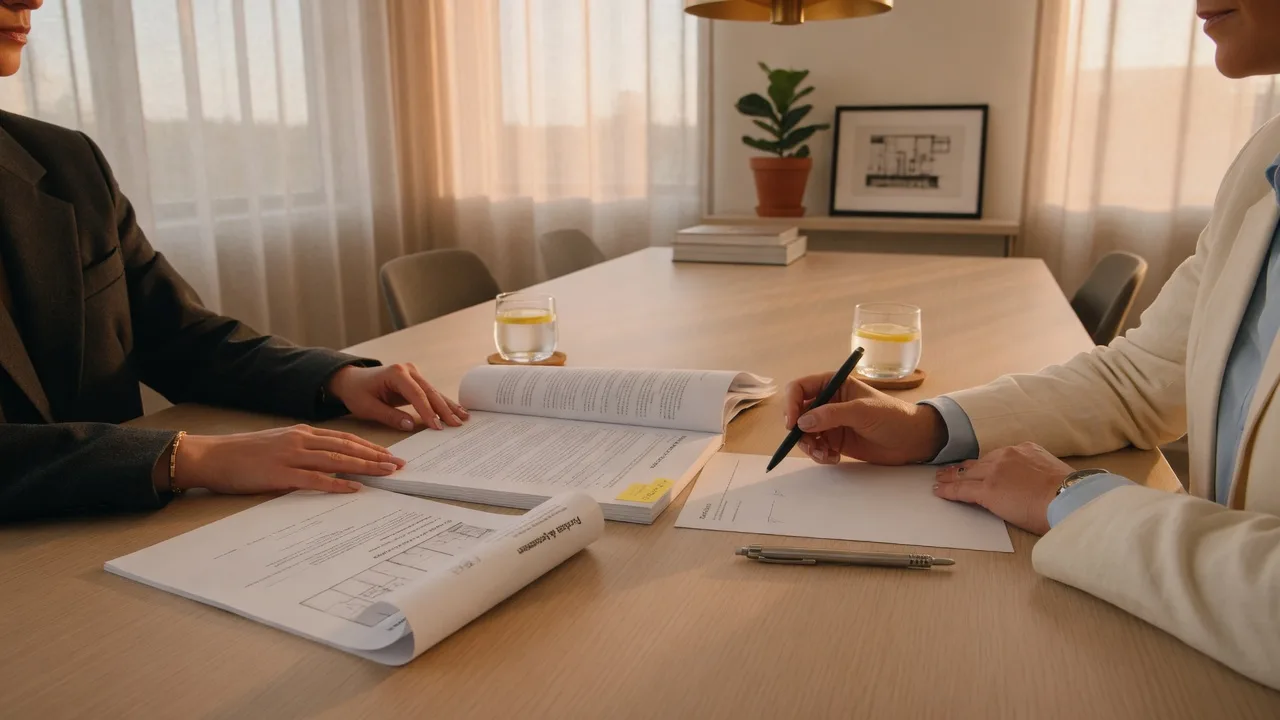
If there's one skill that separates the agents who consistently close strong deals from the ones who leave money on the table — for themselves and their clients — it's negotiation. I've been negotiating real estate transactions for over 30 years, and I can tell you this: negotiation isn't about being aggressive or confrontational. It's about preparation, empathy, strategy, and knowing exactly when to hold firm and when to move. Here's how to master it.
What Makes Real Estate Negotiation Different From Any Other Type of Negotiation?
Real estate negotiation is uniquely complex because you're not just negotiating price — you're navigating emotions, timelines, inspections, appraisals, financing contingencies, and the personal stakes of people making the biggest financial decision of their lives. Unlike a business-to-business negotiation where both parties are理性 and data-driven, real estate negotiations involve people who are emotionally attached to their homes or anxious about finding a new one.
That emotional dimension is exactly why preparation matters so much more in real estate. The agent who walks into a negotiation with deep market knowledge, clear documentation, and a well-defined strategy will outperform the agent who wing it every single time — regardless of whether it's a buyer's market or a seller's market.
How Should You Prepare for a Negotiation Before It Even Starts?
The negotiation begins long before you make an offer or respond to one. It starts with the listing consultation or the buyer's first meeting. Here's the preparation framework I teach every agent in my coaching practice:
1. Know the Market Data Cold
Before you negotiate anything, you need a comprehensive understanding of current market conditions in the specific neighborhood and property type involved. This means:
- Comparable sales (comps): Not just the listing price — the actual sold prices, days on market, and price-per-square-foot for similar properties sold in the last 90 days
- Active inventory: How many competing listings exist in the same price range and neighborhood? Are they sitting or moving fast?
- Market velocity: What's the average days on market for this property type? Is the market accelerating, stable, or slowing?
- Motivation signals: Has the price been reduced? How long has the listing been active? Is the seller relocating, going through a life change, or under financial pressure?
"I've seen agents make offers without checking whether the seller just dropped the price $20,000," says Kim Donahue, a REALTOR® with Medway Realty and a coach with 30+ years of experience. "That's like walking into a negotiation blindfolded. The data is your leverage — know it better than the other side."
2. Understand the Other Party's Motivations
Great negotiators don't just know their own position — they deeply understand the other side's. Before every negotiation, ask yourself:
- What does the seller actually need? Is it maximum price, a quick close, a leaseback, certainty of closing, or something else entirely?
- What's the buyer's real priority? Is it price, closing date, contingencies, or specific terms like included appliances?
- What are the pain points? Every negotiation has pressure points — discover them and you'll find creative solutions that satisfy both parties.
- What's the timeline? A buyer who needs to close in 30 days has different leverage than one who can wait 90.
In my experience, the majority of negotiations are won not by the party who argues hardest, but by the party who understands the other side's needs and crafts solutions that address them.
What Are the Most Effective Negotiation Tactics for Listing Agents?
Listing agents face a specific set of negotiation challenges: managing seller expectations, fielding lowball offers, handling multiple-offer situations, and navigating inspection and appraisal issues. Here's how to handle each:
Handling Lowball Offers
A lowball offer isn't necessarily a bad offer — it's an opening move. The worst thing you can do is dismiss it or react emotionally. Instead:
- Respond with data: Counter with a detailed market analysis showing why the offer is below market value. Concrete numbers are more persuasive than subjective opinions.
- Understand the motivation: A lowball offer from an investor who's pre-approved and ready to close quickly is very different from a lowball offer from an unqualified buyer. Dig deeper before responding.
- Use strategic counter-offers: Don't just counter on price. Counter on terms — shorter inspection period, larger earnest money deposit, appraisal gap coverage, or a faster closing timeline. This shows good faith and moves the conversation forward.
Managing Multiple Offers
A multiple-offer situation is every listing agent's dream — and every buyer's agent's nightmare. The key is to manage the process transparently and professionally:
- Set clear ground rules: Notify all parties that multiple offers have been received and establish a deadline for best-and-final submissions
- Evaluate beyond price: Consider the buyer's financing strength, contingency structure, earnest money, closing timeline, and flexibility on seller needs
- Use escalation clauses wisely: Educate your sellers on how escalation clauses work and whether they serve the seller's interests in your market
- Keep communication professional: Even in a competitive situation, never mislead buyers about the existence or terms of other offers — that's both unethical and risky
Navigating Inspection Negotiations
Inspection negotiations are where deals are made and lost. Buyers see an inspection report and panic; sellers feel attacked. Your job as the listing agent is to keep both sides rational:
- Prioritize issues: Not all inspection findings are equal. Focus on structural, safety, and code issues — not cosmetic items or normal wear and tear
- Provide context: Help your seller understand that a $500 repair request on a $400,000 home is not worth losing a deal over
- Offer creative solutions: Instead of a price reduction, offer a credit at closing, a home warranty, or a repair prior to closing. Sometimes the form of resolution matters more than the amount
- Know when to hold firm: If the buyer is asking for significant concessions beyond the inspection findings, push back with documentation and market data
What Negotiation Strategies Work Best for Buyer's Agents?
Buyer's agents face a different set of challenges, especially in 2026 with the buyer broker agreement now standard. Your negotiation skill is the clearest demonstration of your value to the client. Here's how to negotiate effectively on their behalf:
Crafting Compelling Offers
In competitive markets, your offer needs to stand out on every front — not just price. Consider these elements:
- Personal letter: A well-written, genuine buyer letter can make a significant difference, especially with individual sellers who have emotional attachment to their home
- Flexible closing timeline: Offering to accommodate the seller's preferred closing date can be worth more than thousands of dollars in price
- Strong financing: A pre-approval letter from a reputable lender, combined with proof of funds, signals that your buyer is serious and capable
- Reduced contingencies: Where appropriate, tightening inspection periods or offering appraisal gap coverage can make your offer more attractive without increasing the purchase price
Negotiating After Inspection
After inspection is the buyer's agent's strongest negotiation window. Here's how to use it strategically:
- Be specific and documented: Present repair requests with specific contractor estimates and photos — vague requests get vague responses
- Focus on deal-critical items: Don't ask for a $200 credit on a paint touch-up when the roof needs $5,000 in repairs. Prioritize what actually matters.
- Know your walk-away number: Before the inspection, have a clear conversation with your buyer about their limits. This prevents costly emotional decisions later.
How Do You Keep a Deal Together When It's Falling Apart?
This is where the best agents earn their reputation. Deals fall apart for many reasons — appraisal shortfalls, financing issues, cold feet, inspection surprises, or competing offers. The skilled negotiator's job is to find solutions, not assign blame. Here's my framework:
The Deal-Saving Framework
- Step 1 — Diagnose the real problem: The stated reason and the actual reason are often different. A buyer who wants to back out over a $500 repair may really be experiencing buyer's remorse. Get to the root cause before negotiating solutions.
- Step 2 — Separate the people from the problem: Remind both parties that they share a common goal: closing the transaction. The issue is an obstacle they need to solve together, not an adversarial battle.
- Step 3 — Generate multiple options: Present three potential solutions rather than one. This shifts the conversation from "take it or leave it" to "which option works best for everyone?"
- Step 4 — Use objective criteria: Anchor every proposal in market data, contract terms, and industry standards — not opinions or emotions.
- Step 5 — Know when to walk away: Not every deal should be saved. If the terms have fundamentally shifted and the deal no longer serves your client, the best negotiation skill is knowing when to let go.
What Are the Biggest Negotiation Mistakes Agents Make?
After coaching hundreds of agents and closing thousands of transactions, I've seen these mistakes over and over:
- Making it personal: When the other side pushes back, agents sometimes take it as a personal attack on their competence. Stay professional. This is business.
- Failing to prepare: Walking into a negotiation without comps, market data, or a clear strategy is the single biggest mistake agents make. Preparation is 80% of the outcome.
- Negotiating against themselves: If you make an offer and the other side doesn't respond, don't lower your offer unprompted. Let them counter. Every concession you make before being asked weakens your position.
- Ignoring non-price terms: Closing date, contingencies, earnest money, repair credits, and included items are all negotiation levers. Using only price limits your options.
- Not listening: The best negotiators listen more than they talk. Pay attention to what the other side actually says — the real priorities are often revealed in casual conversation, not formal communications.
- Rushing to close: When negotiations get tense, agents often push too hard for a quick resolution. Sometimes the best move is patience. Time creates pressure — and leverage.
How Can You Improve Your Negotiation Skills Starting Today?
Negotiation is a skill that improves with deliberate practice and honest self-assessment. Here's how to level up immediately:
- Review every deal: After each closing, write down what worked, what didn't, and what you'd do differently. This post-mortem habit is the fastest path to improvement.
- Role-play with a partner: Practice difficult scenarios with a fellow agent — lowball offers, inspection disputes, appraisal shortfalls, multiple-offer situations. The more you rehearse, the more confident you'll be in real negotiations.
- Study negotiation frameworks: Books like Never Split the Difference by Chris Voss and Getting to Yes by Fisher and Ury contain principles that translate directly to real estate transactions.
- Ask for feedback: After a negotiation, ask the other agent (when appropriate) what you could have done differently. Most agents are willing to share insights if you approach them respectfully.
- Work with a coach: Having an experienced mentor review your negotiation strategies, role-play scenarios, and provide real-time feedback accelerates your growth faster than any solo effort.
The Bottom Line
Negotiation is the skill that turns market knowledge, client relationships, and marketing into closed transactions and stronger outcomes. The agents who invest in developing this skill — through preparation, practice, and continuous improvement — are the ones who consistently deliver the best results for their clients and build reputations that generate referrals for years.
Want to sharpen your negotiation skills with personalized coaching? Book a free strategy call with Kim Donahue and let's work through your toughest negotiation challenges together.

Written by Kim Donahue
Kim Donahue is a REALTOR® with Medway Realty and a coach with 30+ years of experience across real estate, mortgage, and business ownership. She specializes in helping agents leverage AI, marketing, and modern strategies to build stronger businesses.
Learn more about Kim