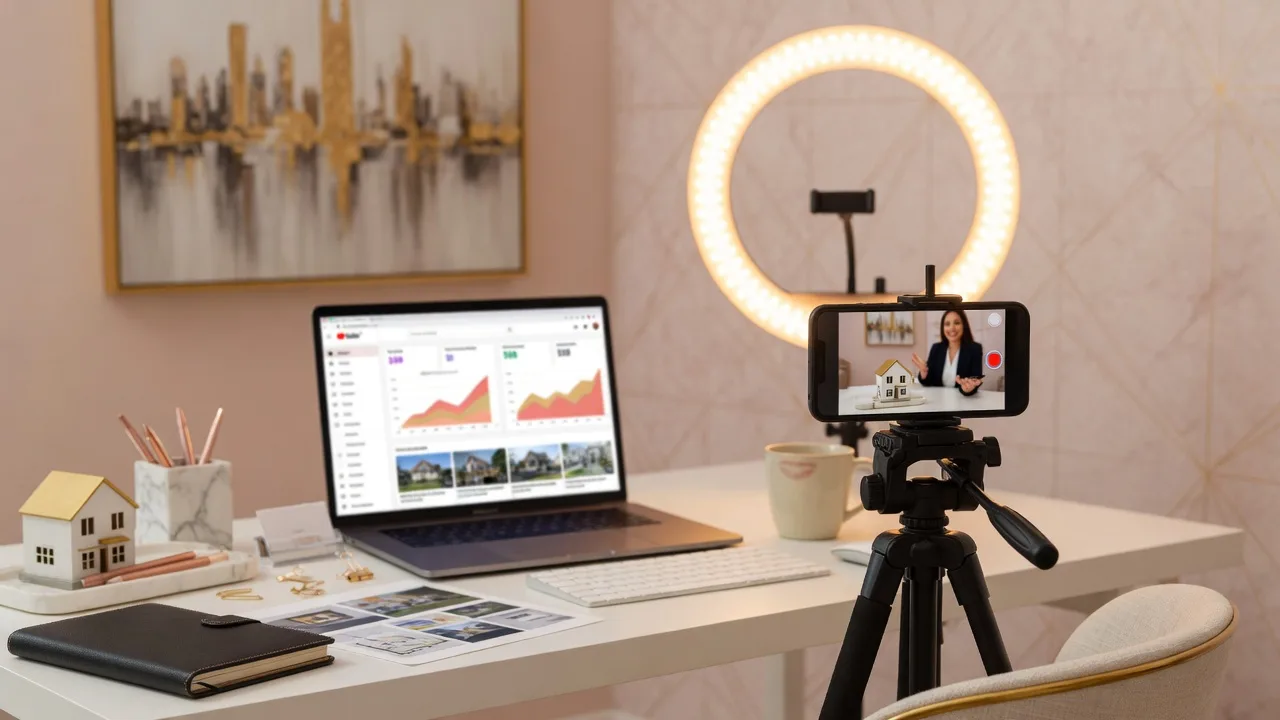
Most real estate agents think YouTube is for vloggers and influencers. They're wrong. YouTube is the second-largest search engine in the world, and it's the only social platform where content you post today can generate leads for the next three to five years. If you're not using YouTube as a real estate agent, you're leaving the most powerful long-term marketing tool on the table.
Why YouTube Works Better Than Any Other Platform for Agents
Unlike Instagram or TikTok, where content has a shelf life of 24 to 48 hours, YouTube videos compound over time. A neighborhood tour you publish today can rank in Google and YouTube search results for years, consistently driving views, subscribers, and inbound leads. Kim Donahue, a REALTOR® with Medway Realty and a coach helping agents nationwide, has seen this firsthand.
"I've had agents tell me they got a call from a YouTube video they posted eight months ago," Kim says. "That doesn't happen with an Instagram Reel. YouTube is the only platform where your content keeps working for you long after you hit publish."
The numbers back it up: according to recent industry data, real estate videos on YouTube generate 403% more inquiries than non-video listings. And buyers who watch agent-created video content are 73% more likely to reach out for a consultation. The platform is built for exactly the kind of educational, trust-building content that real estate agents produce.
How Can Real Estate Agents Choose the Right YouTube Content Pillars?
The biggest mistake agents make on YouTube is treating it like a listing feed. Posting property walkthroughs alone won't build an audience — you need a mix of content that serves different stages of the buyer and seller journey. Kim recommends a four-pillar content strategy:
The 4-Pillar YouTube Content Strategy
- Pillar 1 — Neighborhood Tours (3 per month): Drive through local neighborhoods, highlight schools, parks, restaurants, and community features. These videos rank for "[city name] neighborhood" searches — the exact terms buyers type into YouTube when researching relocation.
- Pillar 2 — Educational Content (2 per month): Answer the questions your clients actually ask. "How much do I need to put down on a house?" "What happens during a home inspection?" "Should I sell before I buy?" These videos establish you as the expert and attract organic search traffic from buyers and sellers in the research phase.
- Pillar 3 — Listing Showcases (2–3 per month): Walk through your active listings with commentary on features, upgrades, and what makes the property unique. These are the videos most agents default to — but they work best when they're part of a broader content mix, not the only thing you post.
- Pillar 4 — Market Updates & Agent Life (1–2 per month): Share what's happening in your local market — interest rate changes, inventory trends, new developments. Mix in personal, behind-the-scenes content that shows who you are as a person, not just as an agent.
What Equipment Do You Actually Need to Start?
One of the most common objections Kim hears is, "I don't have the equipment for YouTube." Her response? "You already have a studio in your pocket." Modern smartphones shoot in 4K, and the YouTube algorithm doesn't care about production quality — it cares about content quality, watch time, and search relevance.
Here's the minimal startup kit that Kim recommends:
- Your smartphone — shoot in 4K if your phone supports it; 1080p is fine if it doesn't
- A $25 clip-on lavalier microphone — audio quality matters more than video quality. Viewers will watch a slightly blurry video with clear audio, but they'll click away from a beautiful video with wind noise
- A basic tripod or phone mount — for static shots, talking-head segments, and desk videos
- Natural lighting — face a window for indoor videos; shoot during golden hour for outdoor content
- Free editing software — use CapCut or DaVinci Resolve to trim clips, add text overlays, and create thumbnails
That's it. You don't need a production crew, a professional camera, or a fancy studio. You need a phone, a microphone, and a plan.
How Do You Optimize YouTube Videos for Local Search?
YouTube SEO is the single biggest competitive advantage for real estate agents on the platform. Most agents don't optimize their videos at all — which means even mediocre optimization puts you ahead of the majority. Here's what matters:
1. Keyword Research for Local Content
Before you film, identify what people in your market are actually searching for on YouTube. Use the YouTube search bar's autocomplete feature — type "Sarasota real estate" (or your market) and note the suggestions that appear. These are real searches that real people are making. Also check Google Trends for your area to spot seasonal and emerging search patterns.
Target long-tail keywords like "best neighborhoods in Sarasota for families" or "moving to Lakewood Ranch FL 2026" rather than broad terms like "real estate." The competition is lower and the intent is higher.
2. Title and Description Optimization
Your video title should include your primary keyword naturally, stay under 60 characters, and make a clear promise to the viewer. Instead of "My New Listing!" try "Beautiful 3BR in Lakewood Ranch — Full Walkthrough & Neighborhood Tour." The second title tells YouTube exactly what the video is about and gives viewers a reason to click.
Write a 200–300 word description that expands on the title, includes your target keywords naturally, and ends with a call to action — your website URL, phone number, or booking link. YouTube uses descriptions to understand context and serve your video in relevant search results.
3. Thumbnails That Get Clicks
Your thumbnail is the single most important factor in whether someone clicks your video. Use high-contrast colors, readable text (3–5 words max), and a face or compelling image. The thumbnail should create curiosity or promise value. Study the top-performing real estate YouTube channels in your market and model their thumbnail style — don't copy, but learn what works.
4. Watch Time and Retention
The YouTube algorithm prioritizes watch time — the longer people watch, the more YouTube promotes your video. This means your opening hook matters enormously. Start every video by addressing exactly what the viewer came to learn, not by introducing yourself or showing a branding logo. Get to the value in the first 10 seconds.
Kim's formula: "Open with the payoff, then explain how you got there. For a neighborhood tour, start with: 'This is the neighborhood that every family moving to Sarasota asks me about — and after seeing it, you'll know exactly why.' That hook keeps people watching."
How Do You Convert YouTube Viewers into Paying Clients?
Getting views is not the goal — getting clients is. Every video should include a clear, specific call to action that moves the viewer from passive watcher to active lead. Here are the conversion strategies that work:
- End every video with a direct CTA: "If you're thinking about moving to [area], I'd love to help. Click the link below to book a free consultation." Make it easy — include the link in your description, pinned comment, and on-screen text
- Add lead magnets: Create a free downloadable neighborhood guide, relocation checklist, or buyer's guide that viewers can access by entering their email. Tools like ConvertKit or MailerLite make this simple
- Use YouTube's Community tab: Post polls, updates, and behind-the-scenes content to keep subscribers engaged between videos
- Cross-promote on social media: Share every YouTube video on Instagram, Facebook, TikTok, and LinkedIn. Use short clips as teasers that drive traffic back to the full video
- Respond to every comment: YouTube comments are a direct line to potential clients. Responding to questions and comments builds trust and signals to the algorithm that your content generates engagement
A Realistic YouTube Content Calendar for Busy Agents
Kim teaches agents to batch-create content. Rather than filming a little every day, dedicate one day per month to filming. Drive through three or four neighborhoods and record tours in a single afternoon. Film two or three educational videos back-to-back at your office or home. Edit them over the following week, then schedule uploads so you're publishing consistently without it consuming your daily schedule.
Sample Monthly YouTube Calendar
- Week 1 Neighborhood tour (published Tuesday) + Educational tip (published Thursday)
- Week 2 Listing showcase (published Tuesday) + Market update (published Thursday)
- Week 3 Neighborhood tour (published Tuesday) + Educational tip (published Thursday)
- Week 4 Listing showcase or community event (published Tuesday) + Behind-the-scenes / personal (published Thursday)
That's eight videos per month — roughly two per week. With a batch-filming approach, you can realistically produce all of this in one or two focused filming sessions and a few hours of editing. Over 12 months, that's 96 videos building your authority and generating leads on autopilot.
The Compound Effect: Why Agents Who Start Now Win
YouTube rewards consistency and longevity. The agents who start building their channel today will have a massive advantage in 12 to 24 months — because every video they publish adds to a library of searchable, trust-building content that works around the clock. The agents who wait another year will be starting from zero while their competitors have hundreds of videos and thousands of subscribers.
"YouTube is a marathon, not a sprint," Kim says. "But it's a marathon where every mile you run adds value to your business forever. The agents who commit to six months of consistent YouTube content are always amazed at the leads that start showing up."
Ready to start your YouTube channel with a strategy that actually works? Book a free strategy call with Kim Donahue and get a personalized content plan for your market and your goals.

Written by Kim Donahue
Kim Donahue is a REALTOR® with Medway Realty and a coach with 30+ years of experience across real estate, mortgage, and business ownership. She specializes in helping agents leverage AI, marketing, and modern strategies to build stronger businesses.
Learn more about Kim